
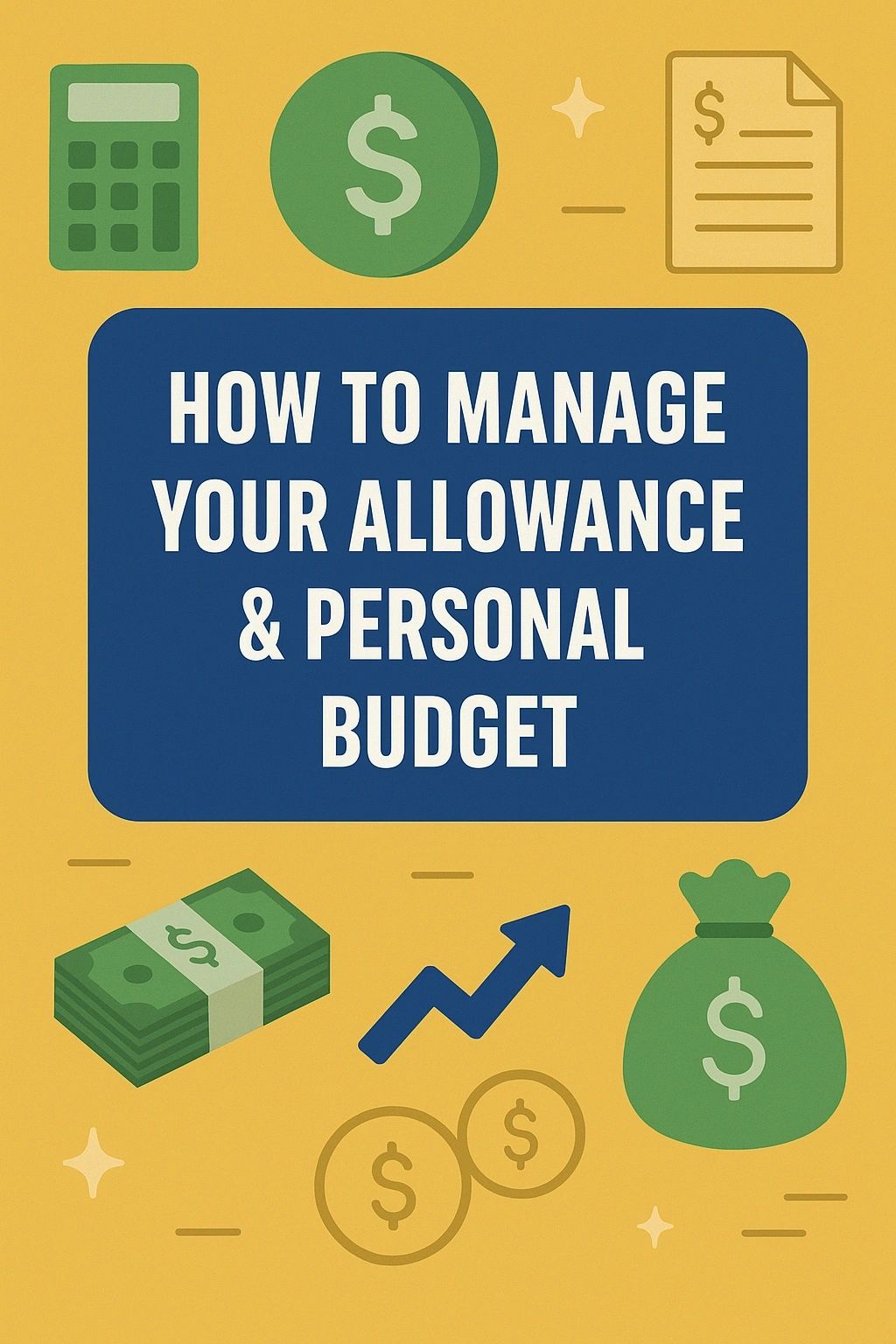
Let’s be real — school taught us the Pythagoras theorem, but not why our wallet feels suspiciously light halfway through the month. Budgeting isn’t about killing all fun. It’s about making your money work for you so you can enjoy life now and still be prepared for what’s ahead. If you’ve ever wondered how to manage your allowance or personal budget without feeling deprived, here’s a step-by-step process that actually works — and fits into real life. --- 1. Know Your Money Personality 🎭 Before you open a spreadsheet or budgeting app, figure out who you are with money. Some spend on a whim because “it was on sale.” Some start saving but lose steam after a week. A few track every penny like it’s an Olympic sport. When I first tracked my spending for a month, I discovered almost half my cash was going to coffee shops — and I wasn’t running a café. That single insight shifted how I handled my money. --- 2. Track Before You Hack 📊 You can’t fix what you don’t measure. For 30 days, write down everything you spend — even the $2 bubble tea. One friend tracked her spending and realized a quarter of her monthly allowance was going into food delivery. By cutting that in half, she instantly freed up more money for savings without sacrificing the things she loved. --- 3. Apply the 50/30/20 Rule (With a Gen Z Twist) ✨ Here’s the classic breakdown: 50% Needs – rent, groceries, bills 30% Wants – fun, shopping, subscriptions 20% Savings & Investments The twist? Automate the savings the moment you get your allowance. Transfer it to a separate account before you even “see” it. Out of sight means out of temptation. --- 4. Build a ‘Fun Guilt-Free’ Fund 🎉 Money management doesn’t mean no fun — it means planned fun. Set aside a fixed amount each month purely for things you enjoy — concerts, trips, sneakers. When the fund runs out, that’s it. No debt. No guilt. --- 5. Rethink Your Emergency Fund 🚨 An emergency fund isn’t for buying the latest iPhone. It’s for real-life moments that could derail your routine: a broken laptop when you rely on it for work or study, medical expenses, or a sudden delay in your allowance. Start with one month’s worth of expenses and build from there. --- 6. Start Micro-Investing 📈 You don’t need thousands to start investing. Even $5 a week in an index fund or savings app compounds over time. The earlier you start, the more powerful it becomes. --- 7. Make Weekly Check-Ins a Habit ⏳ Every Sunday, spend ten minutes reviewing your budget: See what’s left Adjust if needed Plan the next week Money is like plants — ignore it and it dies; nurture it and it grows. --- Final Thought 💡 Budgeting isn’t about restriction — it’s about direction. When you control your money, you control your freedom, your options, and your future. So the next time someone says, “I’m broke,” you can smile and say: “I’m not broke… I’m building.” 💪 --- 💬 What’s one money habit you wish you’d learned earlier? Share it in the comments below — your insight might just be the tip that changes someone’s financial future.
How to Manage Your Allowance & Personal Budget | Gen Z Guide

Bashir Hazim
Senior Business Consultant & Executive Advisor — 20+ years guiding founders, SMEs, executives and boards across Lebanon and the MENA region.
About the founderKeep reading
All posts Related articles

How to Choose Business Consultants in Lebanon
In Lebanon’s fast-evolving economy, where agility and local insight are critical, selecting the right business consultant isn’t just a support decision—it’s…
Continue Reading
How a Consultant Helps Small Businesses
Every year, countless small businesses hit roadblocks that stall progress—unclear strategies, inconsistent cash flow, or teams working in silos. While…
Continue Reading
How to Hire a Business Consultant in Lebanon
Navigating the dynamic economic landscape of Lebanon requires more than just vision—it demands strategic insight and local market understanding. Many…
Continue ReadingReady to Move Forward?
Every strong business decision starts with one honest conversation. Schedule a free 30-minute discovery call — no commitment and no pitch.